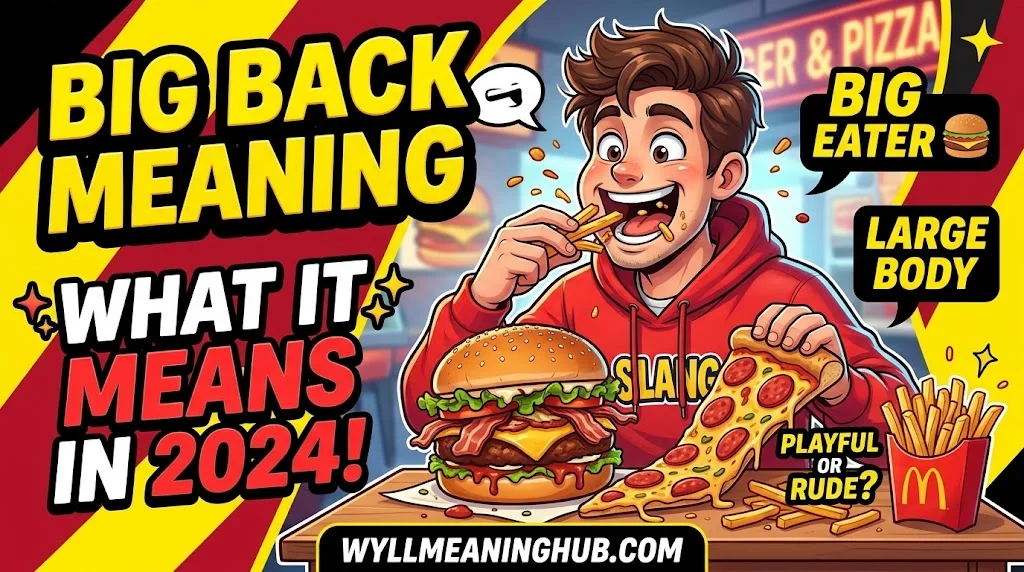
Big-back meaning in slang is simple. It describes a person who eats a lot, has a large body, or is overweight. The tone behind it decides if it’s a joke or an insult.
The term blew up on TikTok. From there it spread to X, Instagram, Reddit, BlueSky, and Threads. This guide explains the big back definition, where it came from, how people use it, and when it hurts.
Table of Contents
What Does Big Back Mean in Slang?
Big back slang carries a few meanings, and context picks the right one. You’ll hear three versions most often in the USA.
- A big eater: someone who loves food and goes back for seconds. Picture a friend who finishes three burgers and fries.
- A large body: a person who is muscular, full-figured, or plump. The phrase can also describe bulky objects, like an oversized TV.
- A self-joke: people call themselves a big back to own their love of food.
Grammar is flexible too. It works as a noun (“He’s a big back”). It also works like an adjective (“big back energy”). You may also see big-backed, wide back, and chonky in the same posts.
Is it a formal word? Not really. Dictionaries treat it as informal slang, and it often shows up in captions, comments, and memes.
Similar words help show the range. These include glutton, gourmand, heavy eater, overeater, and bottomless pit. The opposites are picky eater, light eater, and nibbler.
One more point matters. The phrase can sound playful in one chat and cruel in another. The words stay the same. Only the speaker and the intent change.
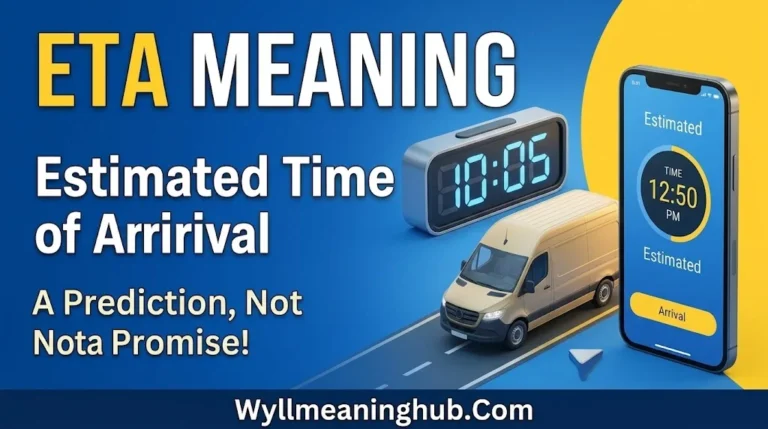
Understanding viral slang like “big back” helps you keep up with online conversations, but social media discussions often involve other popular abbreviations too. One common example is ETA, which stands for “Estimated Time of Arrival” and is widely used in texting, everyday conversations, and online updates to communicate when someone or something is expected to arrive.
Big Back Origin: Where Did This TikTok Slang Come From?
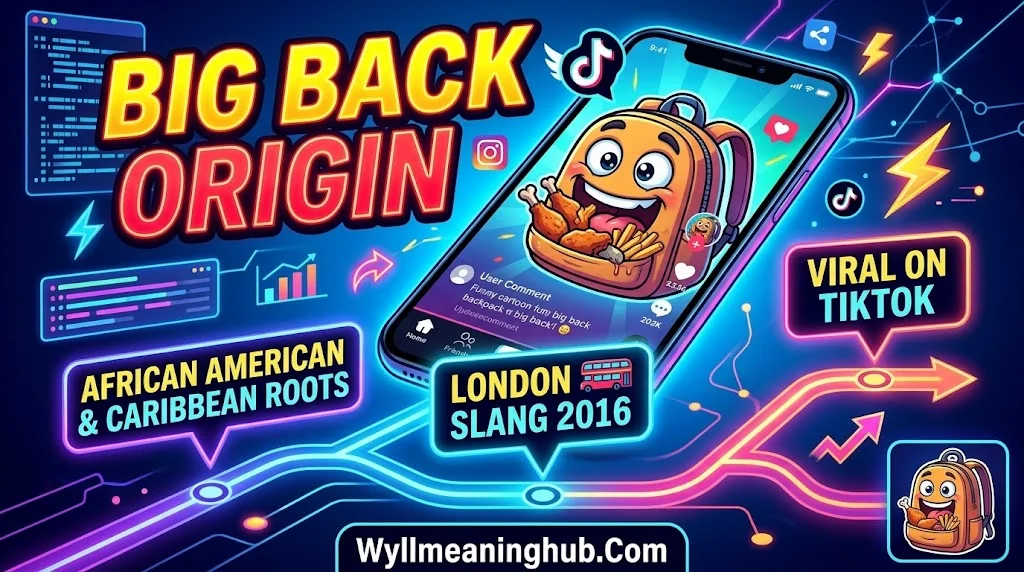
Nobody can name the exact day big back began. Tyler D. Parry, a professor at the University of Nevada, Las Vegas, compares it to folklore. You can’t find the first use, but you can spot the moments it caught on.
Here are the main clues:
- Early roots: In African American and Caribbean English, “back” has long meant a rear end. Sir Mix-a-Lot’s 1992 hit “Baby Got Back” made that sense famous.
- A stretched meaning: Some language watchers think “big back” grew from the rear-end sense to describe a whole large body.
- London link: An online slang entry from 2016 called it London slang for a big booty.
- Viral boom: The term rose sharply in popularity in the mid-2020s.
- The parody: Creator Clarence Lomax turned Dora the Explorer’s “Backpack Song” into a “Big Back” tune. He says he first aimed it at himself, as a push toward his own weight-loss goals.
These stories don’t fully agree, so treat each as a lead, not proof. Parry also says it’s hard to know how much the older “Baby Got Back” meaning feeds today’s use. The word may have been borrowed and given a new context.
Sound plays a part too. Parry notes that alliteration can make a phrase feel less harsh. “Big back” has a bouncy rhythm. That makes it easy to say, easy to caption, and easy to share.
So why did it take off on TikTok in particular? Short videos love short phrases. A food clip needs a quick, funny tag, and “big back” fits.
How to Use Big Back: Examples, Related Slang, and Trends
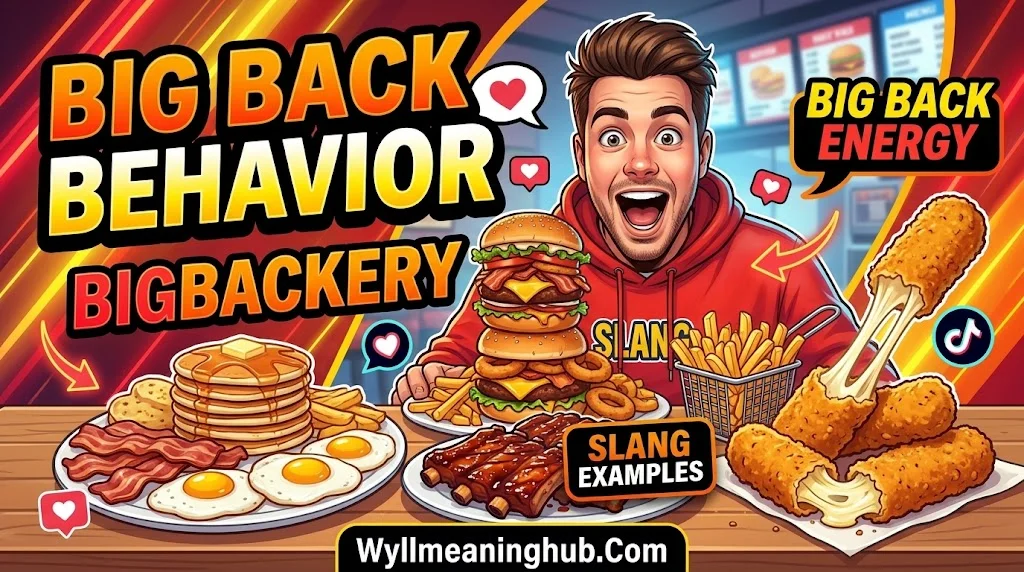
On TikTok, big back often captions videos of heavy meals. Cooks fry ribs, pile on gravy, or show off giant mozzarella sticks. Some creators even stuff pillows under a shirt to act out the joke while they cook, eat, or open the fridge.
Common related terms include:
- Big back behavior: acting like a big eater or a big-bodied person. Frying ribs is a common example.
- Bigbackery: the same behavior, or a huge meal. “Today’s bigbackery: French toast, sausage, and biscuits.”
- Big back energy: a playful, food-loving attitude.
Quick examples in plain English:
- “I ate three slices of pie. Total big back behavior.”
- “That breakfast plate was pure bigbackery.”
- “Uncle Mike kept going back for more turkey. Classic big back.”
The term even pops up outside food. People joke about “big back” computers or TVs when something is bulky and old. That shows how far the slang has stretched.
How should you use it? Use it only on yourself, or with close friends who enjoy the joke. Skip it at school, at work, or with someone you don’t know well. A joke that lands with one person can hurt another.
Here are a few simple do’s and don’ts:
- Do use it for your own meals and your own jokes.
- Do read the room before you say it.
- Don’t aim it at someone’s body.
- Don’t keep going if someone looks upset.
Is Big Back Offensive? Compliment, Insult, or Joke?
Is “big back” offensive? It can be. Even a light joke may sting, because the phrase points at weight and eating habits.
Dr. Erika Stapert of Manhattan Psychology Group explains why. Many people struggle with body image in silence. A joke meant to be harmless can still stir up those feelings. People nearby can feel hurt too, even if the joke wasn’t aimed at them.
Numbers show how common these worries are. A YouGov survey of 1,118 teens in Britain found that 31% felt ashamed of their body, and 40% said friends’ comments made them worry. That survey is from the UK and dates to 2019. Still, it shows how much words can matter.
A six-country study of 21,277 young people aged 10 to 17 found that 35% felt “larger than ideal.” Social media use was linked to body dissatisfaction in that research. A University of Kentucky study also reported that nearly 80% of teens have a social media account by age 13. So slang like this reaches young people early and often.
Language references also point out the other side. When people use the term proudly about themselves, it can feel warm and positive. The key is who says it, and why.
Use this quick tone guide:
- Friendly and self-owned: often fine, and sometimes proud.
- Aimed at someone else: risky, and can feel like body-shaming.
- Repeated or mocking: this is bullying.
What if someone calls you a big back? You have options:
- Laugh it off, if you truly find it funny.
- Say, “That’s not cool,” and move on.
- Claim the word on your own terms.
- Tell a trusted adult or friend if it keeps happening.
You don’t owe anyone a smile. If the teasing turns constant, treat it as bullying and ask for help.
Parents can make a big difference. Talk about food and bodies in a calm, kind way. Ask your teen how they hear the phrase at school. Avoid joking about weight at home, because kids copy what they hear.
FAQs
What is a big back in slang?
It’s a slang term for a person who eats a lot, has a large body, or is overweight. Some people use it playfully, and others use it to tease or shame. The big back meaning always depends on tone.
Can big back be a compliment?
Sometimes. When people use it about themselves, it can feel proud and funny. It can also praise a strong, muscular build. Said about someone else, it often lands as a dig, even when meant kindly.
What does it mean if someone calls me a big back?
They may be joking about your appetite or your body. Check their tone and your own comfort. If it hurts, you can tell them to stop.
Why are kids saying big back?
It’s catchy, it’s tied to food videos, and it spread fast on TikTok. The rhythm makes it fun to repeat. Short, playful slang travels quickly among teens.
Is “big back” a rude word?
It can be, depending on who says it and why. Because it points at weight, many experts advise against using it on others. Using it on yourself, with people who get the joke, carries less risk.
Conclusion:
The big-back meaning shifts with tone, speaker, and setting. It can be a goofy food joke or a real insult. When in doubt, skip it, or save it for jokes about yourself.

Aric ARHAM is a passionate writer and content creator dedicated to helping readers find the right words for meaningful moments in life. With a warm and thoughtful writing style, Aric creates heartfelt messages, wishes, greetings, and inspirational content that people can easily share with their loved ones.