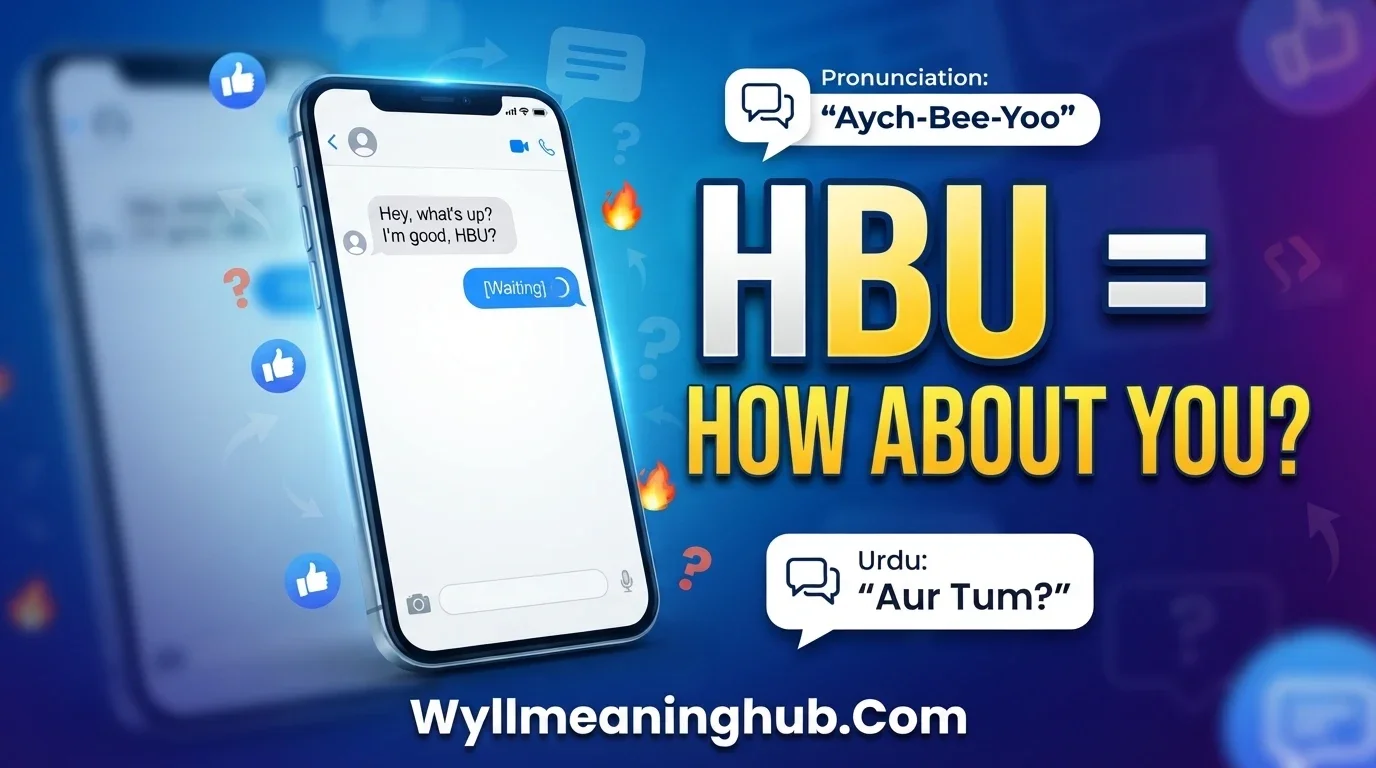
Hbu meaning You’re chatting with a friend and get a message that says, “I’m good, hbu?” It’s three letters, it’s everywhere, and it’s easy to answer once you know what it means.
This guide covers what HBU means, where it comes from, when to use it, when to avoid it, and how to reply in any situation.
Table of Contents
What Does HBU Meaning?
HBU stands for “how about you?” It’s a quick way to hand a question back to the other person after you’ve answered it.
For example:
- “I’m doing great today, HBU?” means “I’m doing great today, how about you?”
- “I’m getting pizza tonight. HBU?” means “I’m getting pizza tonight. What about you?”
The abbreviation comes from the spoken phrase “how ’bout you,” where the B stands for “’bout,” a shortened “about.” Merriam-Webster defines “how about you” as a way to invite someone to respond to what you just said. The texting version is that same idea in three letters.
Related Post: Plancha Meaning Unlocked: The Ultimate Guide to Every Translation & Use
Quick facts
- Pronunciation: People say it letter by letter: “aych-bee-yoo.”
- Capitalization: HBU, hbu, and Hbu all mean the same thing.
- Urdu equivalent: اور تم؟ (aur tum).
- Part of speech: It works like a short question, usually tacked onto the end of a sentence.
The Other Meaning of HBU

Before texting made it famous, HBU was the official abbreviation for Houston Baptist University. The school changed its name to Houston Christian University on September 21, 2022, and now uses HCU.
You’ll still see the old meaning in older articles, alumni groups, and sports coverage. Context makes it obvious. If someone texts “HBU?” after telling you about their weekend, they aren’t asking about a university.
How HBU Works in a Conversation
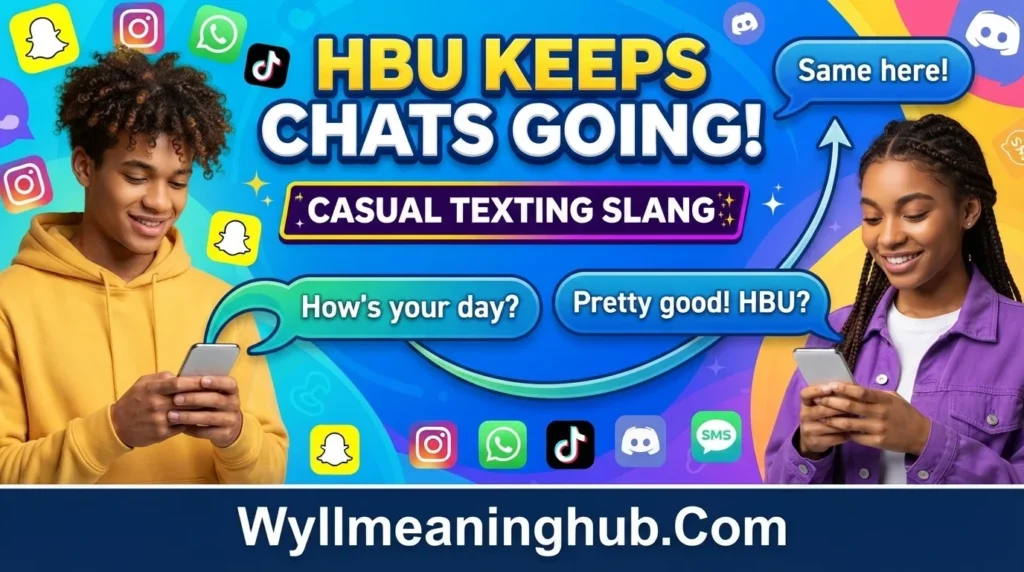
HBU is a conversation keeper. When someone asks how you’re doing, a bare “good” can feel like a dead end. Adding HBU shows you’re interested in them too.
A typical exchange looks like this:
Friend: hey, how’s your day going?
You: pretty good, just finished class. hbu?
Friend: same, about to grab food
Each person answers, then returns the question, so the chat keeps moving.
HBU on its own
Sometimes someone sends only “HBU?” with nothing else. To decode it, look at your last message:
- If you said “I’m tired,” they want to know how you’re feeling.
- If you said “I’m going out tonight,” they want to know your plans.
- If you shared an opinion about a show, they want yours.
If you can’t tell, ask: “HBU what, the plans or the movie?” Nobody minds a quick clarification.
Where to Use HBU
HBU is informal internet slang, so it fits places where short, casual messages are normal:
- Snapchat
- Instagram DMs
- TikTok comments
- Discord
- Regular SMS texts
It also works with friends, classmates, teammates, and people you know well.
Why short check-ins are so common
Texting has been a daily habit for a long time. A 2011 Pew Research survey found that text users sent or received about 41.5 texts a day, and adults aged 18 to 24 averaged 109.5 messages a day. Earlier Pew data showed that 84% of adult texters text just to say hello. These figures are older, but they show why quick check-ins like HBU became so natural. When people send that many short messages, they want shortcuts.
When Not to Use HBU
HBU is not appropriate everywhere. Skip it in:
- Work emails, job applications, and school assignments
- Messages to a boss, client, or professor
- Any formal or first-contact message
In those cases, write “How about you?” in full. A relaxed workplace chat on Slack or Teams may be fine with abbreviations, but if you’re unsure, spell it out. It costs you a few extra keystrokes and avoids any awkwardness.
Is HBU Flirty?
Not on its own. HBU is a neutral phrase, and it only feels flirty when the rest of the conversation is.
Tone does most of the work:
- “I’m good, hbu?” sounds warm and friendly.
- “Fine. HBU.” can sound short, cold, or bored.
- “Better now that you texted. HBU? 😊” is flirty because of the words and emoji around it.
Punctuation, emojis, and how fast you reply all change how it lands. If you’re unsure how someone meant it, look at the whole conversation, not just those three letters.
How to Reply When Someone Sends HBU
The best reply answers the question honestly and adds a little detail. A one-word answer can end the chat, and a short sentence keeps it alive.
Match your reply to what they asked
- They asked about feelings: “Pretty good, just tired. How are you holding up?”
- They asked about plans: “Staying in tonight. Want to watch something?”
- They asked for an opinion: “I loved it. The ending surprised me.”
Replies by tone
- Casual: “Same here!”
- Friendly: “Doing great, thanks for asking!”
- Funny: “Surviving on coffee. HBU?”
- Flirty: “Better now that you texted. HBU?”
- Professional: “Doing well, thank you. How about you?”
Tips for better replies
- Answer first. Don’t just bounce HBU back without saying anything.
- Add one detail. “Good, just got off work” beats “good.”
- Ask something back. If you want the chat to continue, end with a question.
- Match their energy. If they sent a long, thoughtful message, don’t reply with one word.
HBU vs WBU vs WYD: What’s the Difference?
Texting is full of similar-looking abbreviations. Here’s how the common ones compare.
HBU and WBU both hand a question back, and most people use them interchangeably. HBU means “how about you?” and WBU means “what about you?” Some people use HBU after a mood update and WBU after a plan or opinion, but that habit isn’t a rule.
WYD is different. It means “what are you doing?” and usually opens a new topic rather than returning a question.
| Abbreviation | Meaning | Best used for |
| HBU | How about you? | Returning a question |
| WBU | What about you? | Returning a question |
| HBY | How about you? | Same as HBU, a typo-style variant |
| HRU | How are you? | Greeting |
| NMU | Not much, you? | Answering “what’s up” and asking back |
| WYD | What are you doing? | Starting a chat |
A simple rule: use HBU or WBU when you’ve just answered something. Use WYD when you’re starting the conversation.
Common Mistakes to Avoid
1. Using HBU without answering first. If someone asks “how are you?” and you reply only “hbu?”, it can feel like you’re dodging. Answer, then ask.
2. Using it in formal settings. Slang in a message to a professor or hiring manager can look careless. Write it out.
3. Sounding cold. “Fine. HBU.” can read as annoyed. Add a friendly word or emoji if you want to sound warm.
4. Overusing it. If you add HBU to every message, the chat starts to feel like a script. Use it when you actually want to hear the answer.
5. Misreading the meaning. If you see HBU in an article about colleges, it may mean the old Houston Baptist University. In a text, it almost always means “how about you?”
FAQs
What does HBU mean in texting?
HBU means “how about you?” It’s a casual way to return a question after you answer it.
Is HBU flirty?
No, not by itself. Tone, emojis, and the rest of the conversation decide whether it feels flirty.
What is the meaning of HBU?
It’s an abbreviation of “how about you?” used to ask for someone’s feelings, plans, or opinion. It was also once short for Houston Baptist University, now Houston Christian University.
Is it HBU or WBU?
Both are correct. HBU means “how about you?” and WBU means “what about you?” They work the same way in most chats.
Is capitalization important?
No. HBU, hbu, and Hbu all mean the same thing.
What does HBY mean?
HBY is a variant of HBU that also means “how about you?” It’s usually a typo-style version, since Y and U sit close together on many keyboards.
Conclusion
HBU means “how about you?” It’s a small phrase that keeps a conversation moving. Use it with friends, answer before you ask, and write it out in formal messages. Next time someone sends “HBU?”, reply with a real answer and a little extra detail. That one small step is often what turns a quick text into a good conversation.

Aric ARHAM is a passionate writer and content creator dedicated to helping readers find the right words for meaningful moments in life. With a warm and thoughtful writing style, Aric creates heartfelt messages, wishes, greetings, and inspirational content that people can easily share with their loved ones.