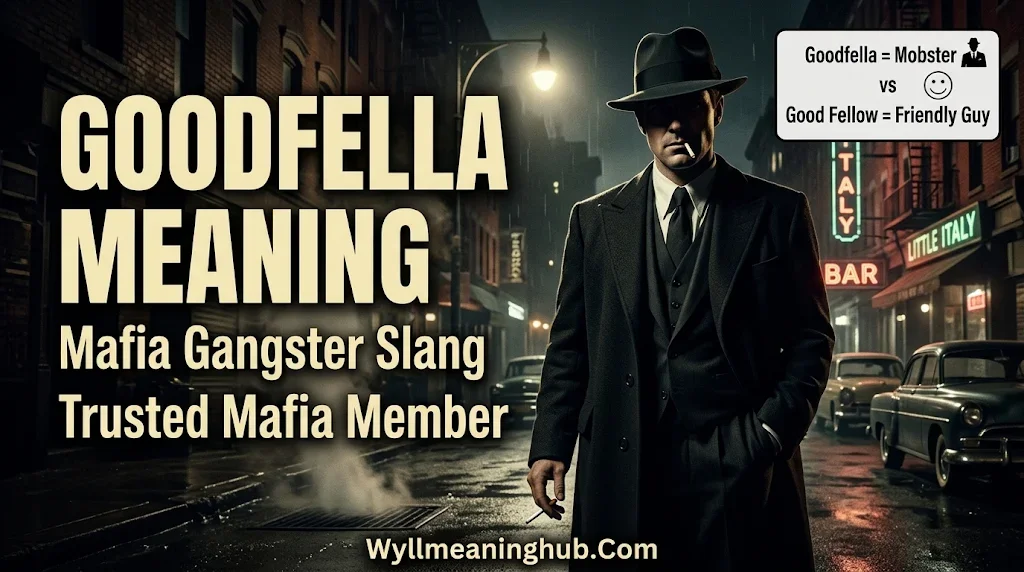
Goodfella meaning: A goodfella is US informal slang for a Mafia gangster. The word became famous after Martin Scorsese’s 1990 film GoodFellas.
It sounds friendly, but it carries a crime-world twist. This guide explains the goodfella slang meaning, where the word came from, how the film shaped it, and how to use it the right way.
Table of Contents
What Is the Goodfella Meaning in Slang?
Let’s start with the short answer, then dig into the details. What does goodfella mean? It names a mobster, and the tone is casual.
What is a goodfella? YourDictionary and Wiktionary both list it as a US informal noun for a Mafia gangster. Encyclopedia.com, citing The Oxford Dictionary of Phrase and Fable, adds that the term was popularized by the film. It also notes that a reliable mob member was seen as a “good fellow” by his associates.
The word has two parts. Good means decent or skilled. Fella is a relaxed form of “fellow.” The plural is goodfellas, and a rarer spelling is goodfellow. You say it as GOOD-fel-uh, three syllables.
Just as goodfella reflects the influence of Mafia culture on everyday language, modern slang continues to evolve through social media and Gen Z conversations. Another popular example is LWK meaning in text, a trending abbreviation that helps people express themselves casually in messages and online chats.
Is goodfella one word or two? Both exist, and they mean different things. Three look-alikes cause most of the mix-ups:
| Spelling | What it means |
| Goodfella | A Mafia member (slang) |
| Good fella | A decent, likable guy |
| GoodFellas | The 1990 crime film |
Inside the mob, the word was about trust. Henry Hill, the real gangster behind the film, said members used it for a man who was all right and one of their own (Mental Floss). A study guide on the film calls it a term of endearment, a way to mark someone as part of the crew.
That idea ties to omertà, the Mafia code of silence. In mob lore, calling someone a “friend of ours” marks a made man. A “friend of mine” is only an associate. One word, two very different levels of trust.
How is a goodfella different from a wiseguy or a mobster? The terms overlap, but each has its own flavor:
| Term | Plain meaning |
| Goodfella | Mafia member, film-linked slang |
| Wiseguy | Mob insider, classic mob slang |
| Mobster | Member of a criminal gang, neutral news term |
| Gangster | Member of an organized crime group |
| Made man | Fully accepted, “initiated” Mafia member |
| Capo | A mob boss who runs a crew |
| Goombah | An associate, often a senior one |
The Mafia vocabulary is full of history. The Oxford Learner’s Dictionary says Mafia comes from Sicilian and first meant “bragging.” The word mob is short for the Latin mobile vulgus, or “the fickle crowd,” and gangster has been in use since at least 1884, according to the Oxford English Dictionary as reported by Mental Floss.
Well-known US Mafia figures include Al Capone and Lucky Luciano, per the same Oxford entry. That is the world the word goodfella points to.
Goodfella Slang Origin and Mafia Roots
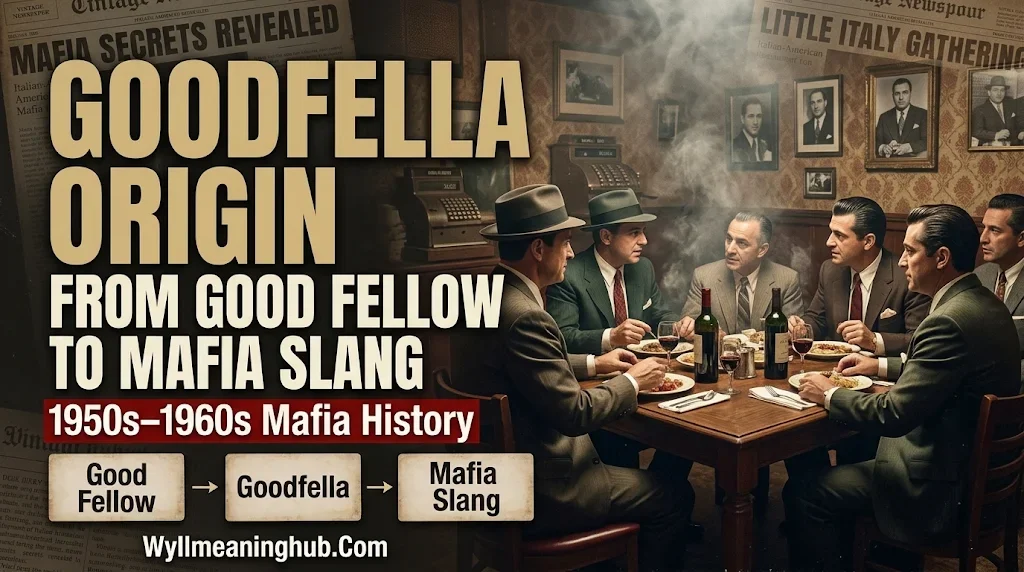
The goodfella origin is part language history, part movie luck. Even word experts admit some gaps.
The seed is older than the Mafia. Good fellow dates to Middle English, according to Dictionary.com. It first meant a fun, friendly companion. Mental Floss says the spelling goodfellow meant someone who knew how to have a good time. The OED also lists a thief sense, but it labels that sense obsolete. So the road to the underworld meaning is not fully clear.
The crime sense came much later. Print use of goodfella and godfather begins in the early 1960s. Mental Floss links that timing to the Apalachin raid of November 14, 1957, when police broke up a gathering of mob figures in New York State and exposed how organized the Mafia was.
Here is a twist most guides skip. Real mobsters leaned on wiseguy, not goodfella. In 2006, an OED editor noted on a linguistics forum that the word seems absent from Nicholas Pileggi’s 1985 book. So the film, not the street, made goodfella a household word.
Why is the film called Goodfellas and not Wiseguy? The book was titled Wiseguy. A TV crime series with that name was already on the air, and it is widely reported that this pushed the film toward a new title. The title then became the slang.
The word even reached a courtroom. In a 1992 trademark dispute cited on Wiktionary, the Order Sons of Italy in America argued that “Goodfellas” was a code word criminals used for each other, and that a synonym was “mafioso.”
The press picked it up too. In 2009, The Times of London used it in a report on the John Gotti Jr. trial, as shown in that same Wiktionary entry. That is a good sign the word had moved from film talk into everyday crime writing.
A few related notes:
- Redfella is a spin-off term. It blends “Red” (a Communist) with goodfella.
- Goodfella’s is also an Irish frozen pizza brand, per Wikipedia. Context tells you which one is meant.
- The word is still rare. One vocabulary site rates it as uncommon, college-level English.
Goodfellas Movie: The Scorsese Masterpiece Behind the Word
The film is why most Americans know the word. It is a landmark of the crime drama genre, and it still sets the bar for mob movies.
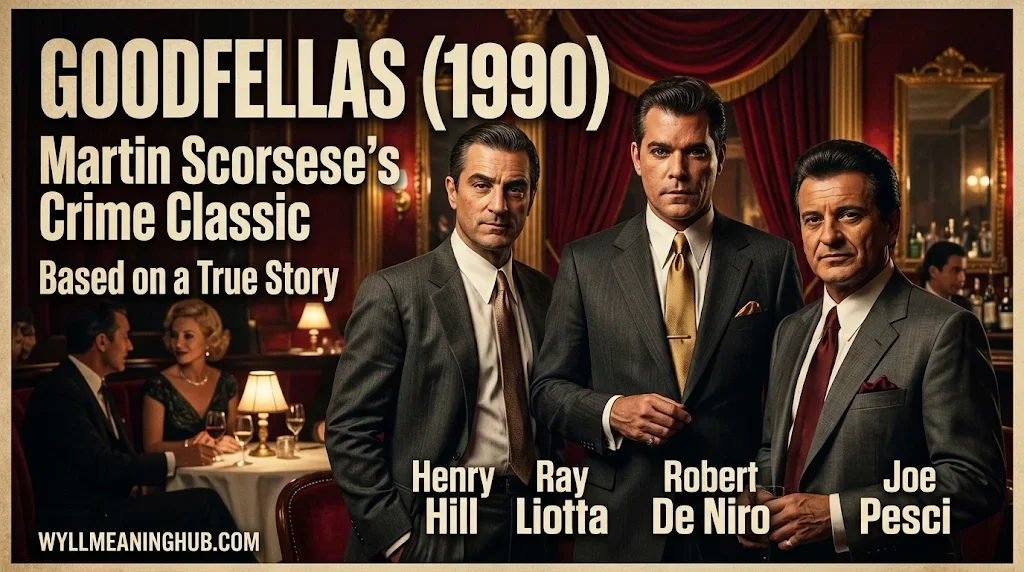
Is Goodfellas a true story? Mostly, yes. Britannica says GoodFellas (1990) was directed by Martin Scorsese and tells the true story of New York mobster Henry Hill. It is based on Nicholas Pileggi’s 1985 book Wiseguy: Life in a Mafia Family.
The story follows Hill from a teenage errand boy in the Lucchese crime family to his 1980 cocaine arrest. He later became a government informant and entered witness protection. Hill died in 2012.
Many characters mirror real people, but the film changed names. Jimmy Conway, Tommy DeVito and Paulie Cicero are screen versions of real mob figures. That is normal for based-on-a-true-story films. The core events stay true, while smaller details shift for the screen.
The cast is a who’s who of crime drama:
- Ray Liotta as Henry Hill
- Robert De Niro as Jimmy Conway
- Joe Pesci as Tommy DeVito
- Lorraine Bracco as Karen Hill
The film includes the 1978 Lufthansa heist at JFK airport, one of the most famous robberies in US crime lore. It also has the long Copacabana shot, where the camera follows Hill and Karen through a nightclub without a cut.
What awards did Goodfellas win? It earned six Oscar nominations, including Best Picture and Best Director. Joe Pesci won Best Supporting Actor. In 2000, the Library of Congress added the film to the National Film Registry, a list of works with lasting cultural value.
Why is Goodfellas called a masterpiece? Critics point to a few things:
- Voiceover narration that pulls you into Hill’s head
- Tracking shots and quick editing that keep the pace tight
- A pop-music soundtrack that shapes every mood
- Scenes that show both the glamour and the danger of mob life
- A runtime of about 146 minutes that never feels slow
Its style still echoes in TV and film. Several cast members later joined The Sopranos, which debuted in 1999. Lorraine Bracco played Dr. Melfi, and Michael Imperioli moved from a small role in the film to a lead role on the show.
In short, the movie gave the word a face, a voice and a soundtrack. That is why Goodfellas meaning and the film now feel inseparable.
How to Use Goodfella in a Sentence (and What to Avoid)
The word is easy to say but easy to misuse. Know your setting first.
How do you use goodfella in a sentence? Keep it casual and tied to film or mob culture:
- “We’re having a goodfella movie marathon tonight.”
- “Slick hair and a long coat? You look like a goodfella.”
- “Every goodfella in that story wants a bigger piece of the action.”
- “He talks like a goodfella from an old crime film.”
In news or formal writing, pick a neutral term. Mobster, organized crime figure and Mafia member are safer. Reporters rarely use goodfella for a real suspect, and for good reason: it can read as a label, not a fact.
Avoid these slips:
- Mixing up goodfella and good fellow.
- Writing “Goodfellas” when you mean one person.
- Using it for any friendly or tough guy.
- Pinning it on a real person without clear facts.
Tone matters. The word is tied to crime, and the 1992 dispute shows that some Italian American groups object to stereotyping. Jokes with close friends are usually fine. Even then, the playful use can feel goofy or puerile to some listeners.
Quick check before you use it:
- Is the setting casual?
- Does the listener know the film or the slang?
- Is the joke safe for that person?
If all three answers are yes, go ahead.
FAQs
Quick answers to the most common goodfella meaning questions.
What is GoodFellas slang for?
It is slang for a Mafia member or gangster. The term spread widely after Scorsese’s 1990 film, which tells the true story of mobster Henry Hill.
What does “puerile” mean?
Puerile means childish, silly or immature. It comes from the Latin puerilis, meaning “boyish.” It is not mob slang, but it can describe goofy joking around with the word.
What does “goofiness” mean?
Goofiness is silly, playful or foolish behavior. It comes from “goofy.” It has nothing to do with the Mafia meaning of goodfella, though people may use it to describe jokey, over-the-top mobster impressions.
What does fellas mean in slang?
Fellas is the casual plural of fella, a loose form of “fellow.” It means guys, as in “the fellas.” That is the “fella” in goodfella.
What is a goodfella?
A goodfella is a trusted Mafia member. In mob terms, he is “one of us.” The word is US informal slang, and the 1990 film made it famous.
The goodfella meaning is simple: a Mafia gangster, in US informal slang. The word grew from an old, friendly phrase and exploded thanks to a Scorsese classic. Use it for movie talk and light jokes, and reach for mobster when the subject is serious.

Aric ARHAM is a passionate writer and content creator dedicated to helping readers find the right words for meaningful moments in life. With a warm and thoughtful writing style, Aric creates heartfelt messages, wishes, greetings, and inspirational content that people can easily share with their loved ones.